Sauna Lighting and Accessories Guide: LEDs, Thermometers and Safe Design
Sauna lighting and accessories should never be treated as afterthoughts. In a properly designed sauna, every component affects […]

Sauna temperature and sauna humidity are often discussed as if they are separate settings, but in a properly designed sauna, they work together. Temperature tells you how hot the air is. Humidity changes how that heat feels on the body. Steam, airflow, stone mass, bench height and room geometry all influence whether the sauna feels balanced and breathable or sharp, stale and difficult to remain in.
This is where many sauna conversations become too simple. People ask what temperature a sauna should be, or whether a sauna should be dry or humid, without first understanding how the room is supposed to perform. A sauna is not defined by temperature alone. A room can measure how hot at the ceiling and still feel weak at the bench. Another sauna may operate at a similar temperature but feel deeper, softer and more immersive because the heat, air, water, wood and stone are working together correctly.
The goal is not to chase the highest number on a thermometer. The goal is to create a stable thermal environment where heat surrounds the body, air remains breathable, steam responds cleanly and the body can settle into the session over time. That is what separates a functioning sauna from a room that merely gets hot.
| Factor | What It Means | Why It Matters |
| Temperature | The measured heat of the air | Establishes the baseline intensity of the sauna |
| Humidity | The amount of moisture in the air | Changes how heat feels against the skin |
| Steam | Water vapor created when water is added to hot stones | Temporarily raises perceived heat and humidity |
| Stone mass | Heated stones that store and release thermal energy | Stabilizes heat and creates responsive steam |
| Ventilation | Controlled movement of fresh air through the sauna | Keeps air breathable and helps distribute heat and steam |
| Bench height | Where the body sits within the thermal layers | Determines whether heat is experienced evenly |
| Ceiling height | Where heat collects inside the room | Shapes the usable heat zone |
| Materials | Wood, glass, tile, stone and other surfaces | Affect heat retention, comfort and thermal load |
Sauna temperature refers to the measured air temperature inside the room. In most traditional saunas, the hottest air collects near the ceiling because heat rises. This means the temperature reading can vary depending on where the thermometer is placed. A thermometer mounted high on the wall may show a much hotter reading than what a person actually experiences on a lower bench.
This is one of the reasons temperature can be misleading. A sauna is not experienced evenly from floor to ceiling. It has thermal layers, and the user’s position inside those layers matters. If the bench is too low, the upper body may feel warm while the lower body remains cooler. If the ceiling is too high, much of the heat may sit above the user where it does little good. In both cases, the room may technically be hot while the experience feels incomplete.
A useful sauna temperature is not just the highest number the room can reach. It is the temperature the body experiences in the occupied zone, where the benches, heater, stones, airflow and ceiling height all work together to create stable heat.
Sauna humidity refers to the moisture level in the air. In a traditional sauna, the room often begins with relatively dry heat, but humidity changes when water is poured over heated stones. This creates steam, which temporarily increases moisture in the air and changes how heat is transferred to the skin.
Humidity affects perceived heat. When moisture increases, sweat evaporates less efficiently from the skin, and the heat can feel more intense even if the air temperature does not change significantly. This is why pouring water on the stones can make the sauna feel hotter almost immediately. The number on the thermometer may stay similar, but the body experiences the environment differently.
Humidity is not automatically good or bad. In a traditional sauna, controlled humidity is part of the experience. The problem comes when humidity is weak, uneven or uncontrolled. Proper stone heat and airflow are what allow steam to feel soft, enveloping and responsive instead of sharp, heavy or short-lived.
Temperature is the baseline condition. Humidity is the dynamic variable that changes how the heat is felt. A sauna with high temperature and poor humidity response may feel harsh and dry. A sauna with controlled temperature, strong stone mass and responsive steam may feel deeper and more complete. The difference is not just moisture. It is how moisture interacts with heat, air movement and the body’s own cooling response.
| Category | Temperature | Humidity |
| Primary role | Measures air heat | Measures moisture in the air |
| User perception | Determines baseline intensity | Changes how intense the heat feels |
| Controlled by | Heater output, room volume, insulation and heat retention | Water on stones, airflow and steam behavior |
| Common mistake | Assuming hotter is always better | Assuming more humidity is always better |
| Performance goal | Stable usable heat in the occupied zone | Responsive steam that disperses cleanly |
| Failure condition | Hot ceiling, cool body, harsh air or slow heat-up | Heavy air, weak steam, sharp steam or uneven moisture |
A good sauna does not maximize temperature or humidity independently. It balances both so the experience feels consistent, breathable and repeatable.
One of the most common sauna myths is that hotter always means better. In reality, extremely hot air can make a sauna feel less comfortable if the heat is poorly distributed or unsupported by stone mass, ventilation and correct user positioning. Harsh heat often comes from imbalance, not quality.
A sauna that relies too heavily on air temperature may feel aggressive at the skin while lacking the deeper radiant quality associated with a better traditional sauna experience. If the stones are not properly heated, steam may feel weak or disappear quickly. If the airflow is poor, the room may feel heavy and stale. If the benches are too low, the user may be sitting below the primary heat layer while the hottest air sits overhead.
Better sauna performance is not about proving the room can get hotter. It is about allowing the body to remain in the environment long enough for the session to develop. That requires heat that is stable, air that is breathable and humidity that responds predictably when water is introduced.
Humidity changes the way heat interacts with the body. In dry conditions, sweat evaporates more readily, which helps the body regulate heat. When humidity rises after water is added to the stones, evaporation slows and the heat feels more immediate and enveloping. This is part of what makes traditional sauna dynamic rather than static.
The right humidity response should feel temporary, controlled and integrated with the room. Steam should rise from the stones, move through the occupied zone and dissipate cleanly. It should not feel like a heavy cloud trapped in one part of the room or a sharp blast that makes the session unpleasant. Those issues usually point to poor stone temperature, weak airflow, incorrect heater placement or an imbalanced room.
In a well-designed sauna, humidity becomes a way to shape the session in real time. The user can stay in dry heat, introduce steam, cool down, rest and return. The environment responds instead of remaining fixed.
Steam is one of the defining elements of traditional sauna. When water is poured onto properly heated stones, it vaporizes quickly and changes the room’s humidity and perceived temperature. This moment is often misunderstood as a simple way to make the sauna hotter, but its role is more nuanced.
Steam adds intensity, but it also adds depth. It changes heat transfer at the skin, softens the feeling of the air when properly distributed and creates a more immersive environment. The quality of that steam depends heavily on the stones. If the stone mass is hot enough and sufficient for the room, steam feels responsive and full. If the stones are not properly heated, the steam can feel weak, thin or short-lived.
Airflow matters just as much. Without proper ventilation and circulation, steam may not move evenly through the room. It can concentrate in isolated areas or feel heavy instead of clean. A good steam response is not accidental. It is the result of heater sizing, stone mass, ventilation and room layout working together.
Sauna stones are not decorative. They are the thermal core that makes traditional sauna humidity possible. Stones absorb heat from the heater, store that energy and release it gradually into the room. When water is added, that stored heat turns water into steam.
Without adequate stone mass, the sauna becomes more dependent on air temperature. That can create a sharper and less stable experience. The room may be hot, but it may not have the depth or responsiveness that comes from heated stones. If the stones cool too quickly when water is added, humidity response becomes weak and inconsistent.
| Stone Condition | Effect on Steam and Humidity |
| Properly heated stone mass | Steam feels responsive, full and controlled |
| Too little stone mass | Humidity response may be weak or short-lived |
| Poor stone loading | Airflow through the heater may be restricted |
| Degraded stones | Steam quality and heat stability can decline |
| Air heated faster than stones | Room may feel hot but steam may underperform |
The best sauna temperature experience usually depends on more than hot air. It depends on stone heat that lingers, stabilizes the room and gives steam its character.
Ventilation is often overlooked because it is not as visible as the heater, benches or wood. But it directly affects both temperature and humidity. Airflow determines how fresh air enters, how heat circulates, how steam moves and how stale air exits the sauna.
Without ventilation, heat can become stagnant. The upper part of the room may be extremely hot while lower areas feel disconnected. Humidity may concentrate unevenly after water is added to the stones. Air can feel heavy, and users may end sessions early because the room becomes difficult to tolerate.
Good ventilation does not ruin the sauna by letting all the heat escape. That is another common misconception. The goal is balanced airflow: enough movement to keep air breathable and heat usable, but not so much that the sauna loses stability. When ventilation is designed correctly, the room feels alive, responsive and comfortable over time.
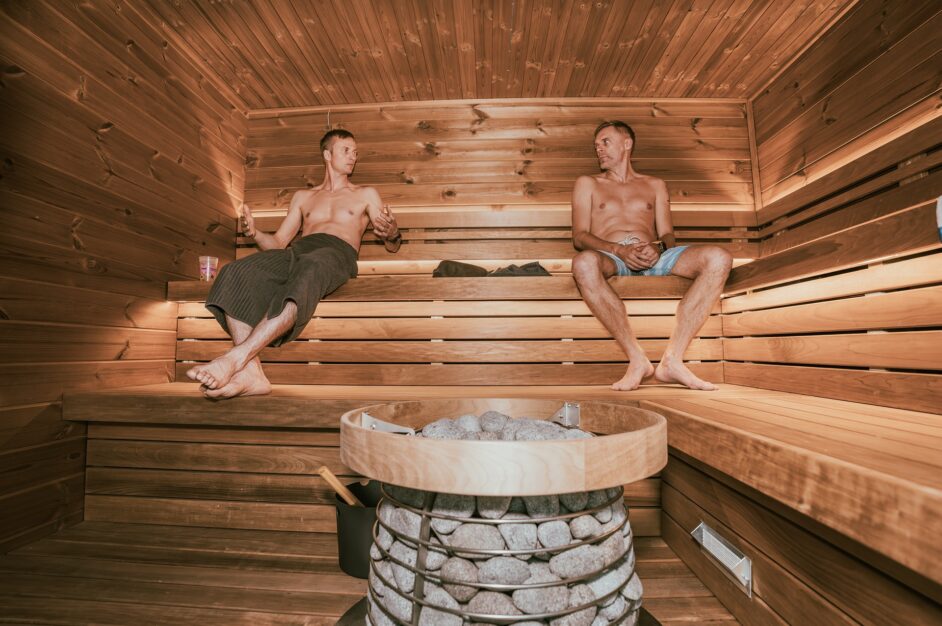
A sauna does not have one uniform temperature. It has layers. The hottest air collects near the ceiling, the primary heat zone sits below that and cooler air settles lower in the room. This natural stratification is why bench height and ceiling height are so important.
If the body sits too low, the user does not receive the full sauna experience. The head may be in a warm zone while the feet remain cooler, creating an uneven sensation that is often described as “cold feet.” Raising the heater temperature may not solve that problem because the issue is not simply output. The issue is where the body is positioned relative to the heat.
A well-designed sauna uses stratification intentionally. The upper bench is placed in the active heat zone, while lower benches provide transition or cooler seating. Ceiling height is controlled so heat stays useful rather than collecting far above the body. Temperature only matters when it is measured and experienced in the right place.
Traditional saunas are often called dry saunas, but that phrase can be misleading. A traditional sauna may begin with dry heat, yet it is designed for water to be added to the stones. The experience moves between drier heat and temporary humidity as steam is introduced.
A fully dry sauna experience can feel simple and steady, but without steam, it may lack the dynamic quality many people associate with traditional sauna. A more humid sauna session feels more intense at the skin and can create a deeper sensory experience when properly controlled. Neither mode is inherently better. The value comes from being able to move between them intentionally.
| Sauna Style | Experience |
| Drier traditional sauna | Lower humidity, stronger evaporation, steady heat feel |
| Traditional sauna with steam | Temporary humidity increase, stronger perceived heat, more dynamic session |
| Poorly ventilated humid sauna | Heavy air, uneven steam, shorter comfort window |
| Balanced sauna humidity | Responsive steam, breathable air, stable heat |
A traditional sauna should not feel permanently wet like a steam room. It should allow humidity to rise and fall as part of the session.
A sauna and a steam room are different thermal environments. A traditional sauna typically uses higher air temperatures and lower baseline humidity, with steam introduced temporarily through water on heated stones. A steam room uses a steam generator to create constant high humidity at lower air temperatures.
This difference changes how the body experiences heat. In a steam room, the air feels dense and wet because humidity remains high. In a sauna, the air is generally drier, and steam is added in controlled bursts. The sauna’s wood surfaces, heater, stones and ventilation create a different kind of thermal rhythm.
| Category | Traditional Sauna | Steam Room |
| Temperature | Typically higher air temperature | Typically lower air temperature |
| Humidity | Lower baseline humidity with steam bursts | Constant high humidity |
| Steam source | Water poured over heated stones | Steam generator |
| Materials | Wood and stone-based environment | Tile, stone or waterproof surfaces |
| Heat feel | Dry heat with dynamic steam | Dense, moist heat |
| Routine | Heat, steam, cooling and rest | Moist heat exposure and cooling |
Neither system replaces the other. They create different experiences, and the right choice depends on whether you prefer dry heat with responsive steam or continuous moist heat.
Many people search for sauna temperature and sauna humidity because they want to understand the benefits of sauna use. That makes sense, but benefits should not be reduced to a single ideal number. The body’s response depends on the total experience: heat exposure, humidity changes, session duration, cooling, rest, frequency of use and individual tolerance.
Balanced temperature and humidity can support a more comfortable and repeatable routine. When the sauna feels breathable and stable, users are more likely to stay long enough for the session to develop and to use the sauna consistently over time. When the room feels harsh, stale or uneven, users often leave early or stop using the sauna altogether.
The practical takeaway is simple: the best sauna benefits come from a sauna environment that people can use properly and consistently. That environment depends on performance, not just a thermometer reading.
The highest temperature is not always the best sauna experience. If the heat is harsh, uneven or poorly ventilated, a higher number may make the room less usable rather than better.
Humidity is not just an accessory. Steam changes how heat feels and is central to the traditional sauna experience. Weak or inconsistent steam often points to problems with stone mass, heater sizing or airflow.
Temperature readings vary depending on thermometer placement. A sauna may be very hot near the ceiling but much cooler where the body sits. The occupied bench area matters most.
Proper ventilation does not weaken the sauna. It keeps air breathable, supports heat movement and helps steam distribute correctly. A sealed hot room can quickly become uncomfortable.
A traditional sauna is not the same as a steam room. Saunas use dry heat with temporary steam from stones, while steam rooms use constant high humidity from a steam generator.
Poor temperature or humidity performance may be caused by heater sizing, but it may also come from ceiling height, bench height, insulation, glass load, ventilation or stone mass.
Better sauna temperature and humidity begin with system design. The room should be proportioned so heat stays in the occupied zone. Benches should place the body where the heat is usable. The heater should be sized for the actual room volume, glass, materials and exposure. Stones should provide enough thermal mass to create responsive steam. Ventilation should move air without destabilizing the room.
| Design Area | Performance Goal |
| Ceiling height | Keep heat close to the occupied zone |
| Bench height | Place the full body in usable heat |
| Heater sizing | Heat air and stones together |
| Stone mass | Create stable heat and responsive steam |
| Ventilation | Maintain breathable air and distribute steam |
| Materials | Support heat retention and comfort |
| Glass planning | Account for heat loss |
| Cooling/rest flow | Complete the sauna cycle |
This is why sauna performance cannot be separated from sauna design. Temperature and humidity are outcomes of the system. When the system is right, the numbers become less important than the experience itself.
Sauna temperature matters, but it does not define the sauna by itself. Humidity matters too, but it only performs correctly when steam, airflow and stone mass are working together. A true sauna experience is created by the relationship between heat, air, water, wood and stone inside a room that is designed to perform.
The best sauna is not necessarily the hottest sauna or the most humid sauna. It is the sauna that feels balanced, breathable, responsive and repeatable. Heat surrounds the body evenly. Steam changes the room in a controlled way. Air continues to move. The body can settle into the session instead of fighting the environment.
That is what most temperature and humidity conversations miss. A sauna is not a number. It is a system, and the system is what creates the experience.
The ideal sauna temperature depends on the type of sauna, user preference, bench position, humidity and overall room design. Temperature should be evaluated by how the sauna feels in the occupied zone, not only by the number shown near the ceiling.
Ideal sauna humidity depends on whether the session is dry or includes steam from water on the stones. In a traditional sauna, humidity often rises temporarily when water is added, then settles as airflow moves moisture through the room.
Not always. Higher temperature can feel harsh if heat is poorly distributed, ventilation is weak or the stones are not properly heated. A balanced sauna experience matters more than maximum temperature.
Adding water to hot stones creates steam, which increases humidity and slows sweat evaporation from the skin. This raises perceived heat even if the air temperature does not change much.
A traditional sauna often begins as a dry heat environment but is designed for water to be added to the stones. This creates temporary humidity and steam. It should not feel constantly wet like a steam room.
Sauna humidity is usually lower and changes when water is added to heated stones. Steam room humidity is much higher and more constant because a steam generator fills the room with moist air.
A sauna may feel stale because of poor ventilation. Without proper airflow, heat and humidity can become stagnant, oxygen quality may decline and the room can feel heavy even when the temperature is high.
Cold feet are usually caused by poor bench height, excessive ceiling height, weak airflow or incorrect heat-zone planning. The lower body may be sitting below the active heat layer.
Humidity changes how heat is felt and can deepen the sauna experience when properly controlled. More humidity is not always better. The quality of the steam and airflow matters.
Yes. If humidity becomes heavy, stagnant or poorly distributed, the sauna can feel uncomfortable. Traditional sauna humidity should be responsive and controlled, not constantly saturated.
Stone mass stores heat and turns water into steam. Without enough properly heated stones, steam may feel weak, sharp or inconsistent.
Ventilation helps move heat through the room and keeps air breathable. Proper ventilation supports temperature stability rather than simply letting heat escape.
Yes. Saunas naturally form thermal layers because heat rises. Upper benches are warmer, while lower benches are cooler. This is why bench height is central to sauna design.
Better temperature and humidity come from proper heater sizing, stone mass, ventilation, ceiling height, bench placement, insulation and material planning. The room should be designed as a complete system.