Sauna Temperature vs Humidity: Performance Guide
Sauna temperature and sauna humidity are often discussed as if they are separate settings, but in a properly […]

Sauna lighting and accessories should never be treated as afterthoughts. In a properly designed sauna, every component affects the experience in some way, whether it is the lighting that shapes the mood of the room, the thermometer that helps users understand the environment, the hygrometer that tracks humidity, or the timer that supports safe, consistent sessions. These details may seem small compared with the heater, benches, ventilation and wood selection, but they influence how the sauna feels, how it is used and how confidently people move through the session.
This is where many sauna accessory conversations become too product-focused. Buyers often ask for the best waterproof LED sauna lights, the best sauna thermometer or the top sauna lighting kit without first asking whether those products are actually appropriate for a high-heat, high-humidity environment. A sauna is not a normal room. Heat, moisture, steam, electrical systems and material movement create conditions that standard home lighting and consumer accessories are not designed to handle.
The right approach is to choose sauna lighting and accessories as part of the full system. Lighting should support visibility and atmosphere without adding unnecessary heat or glare. Thermometers and hygrometers should help users understand the room without becoming the only measure of performance. Electrical components should be rated and installed for the environment they are entering. Accessories should support the sauna ritual without interfering with heat, airflow, safety or the simplicity of the space.
| Component | Primary Role | What to Consider |
| Sauna lighting | Visibility, safety and atmosphere | Heat resistance, moisture rating, placement, glare and electrical safety & Certifications |
| LED strips | Indirect accent lighting | Sauna-rated components, protected placement and transformer location |
| Integrated lighting | Built into benches, backrests or architecture | Better design control when planned early |
| Standalone sauna lamps | Simple light source | Must be rated for sauna conditions and placed safely |
| Thermometer | Measures air temperature | Placement matters because temperature varies by height |
| Hygrometer | Measures humidity | Useful for understanding steam response, not a complete performance measure |
| SandTimer or hourglass | Helps track session length | Should be easy to see and safe for sauna use |
| Essential oils | Adds aroma when used properly | Should be used carefully and according to sauna-safe guidance |
| Controls | Operate lighting, heater or features | Should usually be protected from direct high-heat exposure |
| Electrical wiring | Powers lights and accessories | Must be suitable for high-temperature sauna environments |
Sauna lighting is not the same as bathroom lighting, outdoor lighting or decorative home lighting. The sauna environment exposes fixtures to high heat, humidity changes, steam, cleaning moisture and repeated thermal cycling. A fixture that performs well in a damp bathroom may still be wrong for a sauna if it is not designed for elevated temperatures or if its electrical components cannot tolerate the heat.
This is especially important with LED lighting. LEDs are often promoted because they are efficient, long-lasting and flexible, but standard LED strips and drivers are not automatically safe for sauna use. Heat can shorten the life of electronic components, weaken adhesives, discolor materials or create safety concerns when products are installed in the wrong location. A sauna-rated lighting system should be selected with the environment in mind, not simply because it looks good in a product photo.
The best sauna lighting supports the experience quietly. It should make the room feel calm, safe and intentional without overwhelming the natural character of heat, wood, stone and steam. In a high-performing sauna, lighting does not compete with the environment. It helps reveal it.
A safe sauna light is designed for the specific conditions of the sauna environment. That means the fixture, lens, wiring, housing, transformer and controls all need to be appropriate for heat, moisture and installation location. A product described as “waterproof” is not automatically sauna-safe because water resistance and heat resistance are different requirements.
When evaluating sauna lighting, the most important questions are whether the fixture is rated for the temperatures it will experience, whether it can tolerate humidity and steam exposure, whether the wiring and connections are protected, and whether the power supply or driver can be located outside the highest heat zones. Manufacturer guidance and local electrical requirements should always be followed because sauna lighting sits at the intersection of design, comfort and safety.
| Requirement | Why It Matters |
| Heat-rated components | Standard fixtures may fail under sauna temperatures |
| Moisture protection | Steam and cleaning moisture can affect housings, lenses and wiring |
| Proper placement | Heat exposure varies depending on height and distance from the heater |
| Protected wiring | Wiring must be suitable for sauna conditions |
| External drivers/transformers when required | Electronic components often need protection from high heat |
| Glare control | Bright exposed lighting can make the room feel harsh |
| Serviceability | Fixtures should be maintainable without disrupting the sauna system |
A good rule is simple: if a lighting product is not clearly designed for sauna use, it should not be assumed safe just because it is small, waterproof or LED.
Many buyers search for waterproof LED lights for saunas, but waterproof is only part of the requirement. A sauna light may need moisture resistance, but it also needs to survive elevated temperatures. This is where standard LED strips, bathroom-rated fixtures and outdoor lighting products can fall short.
Waterproof ratings are typically focused on moisture intrusion. They do not necessarily tell you how the product performs under sustained heat. In a sauna, the hottest areas are often higher on the wall or near the ceiling, while cooler zones may exist lower in the room. This means placement is just as important as product selection. A light that might survive under a bench could fail quickly if placed near the upper heat zone.
| Product Claim | What It Does Not Automatically Guarantee |
| Waterproof | Safe operation under sauna-level heat |
| Outdoor-rated | Suitability for enclosed high-temperature rooms |
| Bathroom-rated | Performance near sauna heaters or upper walls |
| LED | Heat tolerance or sauna-safe driver placement |
| Low voltage | Correct wiring, transformer placement or sauna approval |
For sauna design, the better question is not “Is this light waterproof?” It is “Is this light designed, rated and installed for the exact conditions of this sauna?”
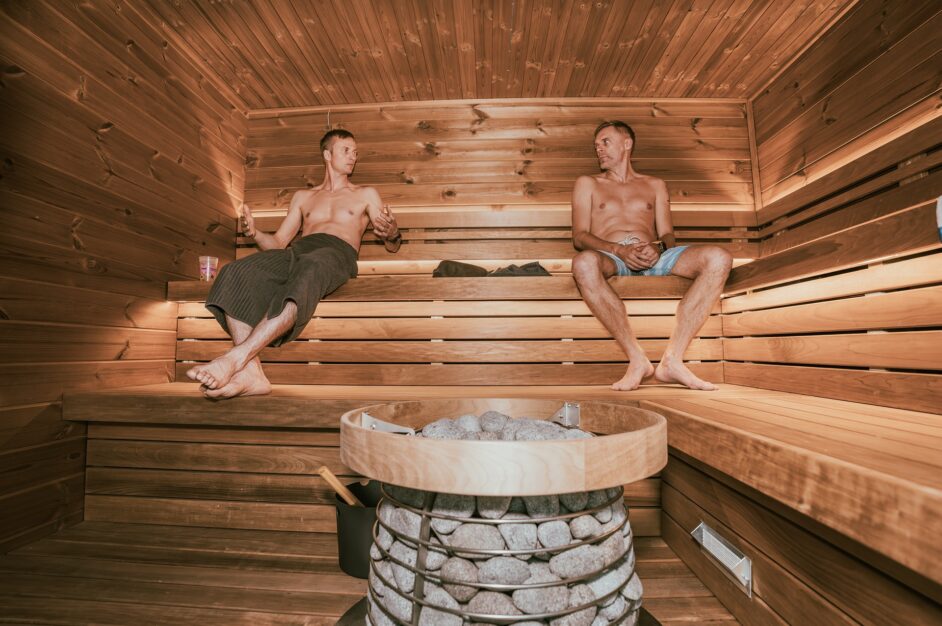
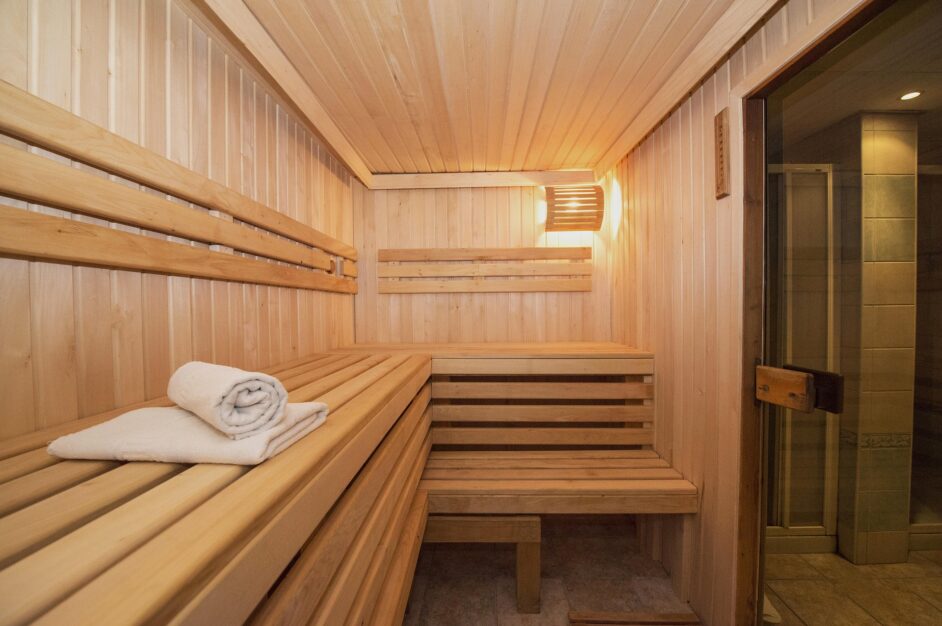
Sauna lighting should be placed where it supports comfort, safety and atmosphere without creating glare or unnecessary exposure to heat. In many luxury and custom saunas, the best lighting is indirect. It may be placed under benches, behind backrests, along low wall lines or in protected architectural channels where the light washes across the wood instead of shining directly into the user’s eyes.
Placement also affects durability. The upper part of the sauna is hotter, so lights installed near the ceiling face more demanding conditions than lights placed lower in the room. Areas near the heater may also experience higher heat and more direct environmental stress. For this reason, lighting layout should be planned with bench height, heater location, airflow and service access in mind.
| Lighting Location | Best Use | Considerations |
| Under-bench lighting | Soft ambient glow and safer low-level visibility | Often lower heat exposure, but still requires sauna-rated components |
| Behind backrests | Warm indirect light and premium atmosphere | Must avoid uncomfortable heat or glare near the body |
| Low wall lighting | Pathway visibility and subtle mood | Should be protected from moisture and impact |
| Ceiling lighting | General illumination | Higher heat exposure requires careful fixture selection |
| Corner lighting | Architectural accent | Should not interfere with airflow or maintenance |
| Exterior entry lighting | Safety before and after sessions | Must coordinate with surrounding wet or outdoor areas |
The goal is not to make the sauna bright. The goal is to make the room feel safe, calm and usable.
A common question in sauna design is whether to use standalone sauna lamps or integrated lighting. Both can work, but they create different experiences. A standalone sauna lamp is usually a simpler fixture installed on the wall or ceiling. It can be effective in more traditional or compact sauna layouts, especially when the goal is straightforward visibility.
Integrated lighting is planned as part of the sauna architecture. It may be built into bench structures, backrests, wall reveals, ceiling details or custom channels. This approach generally creates a more refined atmosphere because the light source is less visible and the room feels more intentional. Integrated lighting also allows the design team to coordinate lighting with bench layout, wood direction, heater placement and overall mood.
| Lighting Type | Advantages | Limitations |
| Standalone sauna lamp | Simple, familiar and easier to service | Can feel more utilitarian or create glare if poorly placed |
| Integrated lighting | Cleaner design, softer mood and better architectural control | Must be planned early and installed correctly |
| LED strip lighting | Flexible and useful for indirect effects | Requires sauna-rated components and careful driver placement |
| Fiber optic-style lighting | Can create subtle star or accent effects | More specialized and should be planned as a system |
For custom saunas, integrated lighting is often the stronger design choice because it supports the larger experience rather than appearing as an added fixture.
LED strip lighting can be used in sauna environments, but only when the product and installation method are appropriate for high heat and humidity. Standard LED tape, standard adhesive backing and exposed connectors can fail quickly in sauna conditions. This is especially true when strips are placed high on walls, near ceilings or close to the heater.
When LED strips are used well, they can create a premium, quiet atmosphere. Under-bench lighting can make the sauna feel grounded and calm. Backrest lighting can soften the room. Low-level linear lighting can improve safety during entry and exit. The best installations hide the source of the light and allow the glow to shape the space.
The safest planning approach is to treat LED strip lighting as an electrical and thermal design decision, not as a decoration. The strip, channel, diffuser, wiring, driver, control location and service access should all be coordinated before installation begins.
Star lighting, pinpoint lighting and small accent fixtures are becoming more common in wellness spaces because they can create a quiet, immersive atmosphere. In a sauna, this type of lighting should be handled with restraint. The room already has strong sensory qualities from wood, heat, steam and shadow, so accent lighting should support that environment rather than overpower it.
Star-style lighting may be appropriate in certain custom saunas, especially where the goal is a spa-like or meditative atmosphere. However, the same safety concerns apply. Components must be appropriate for heat, moisture and installation location. Any controls, drivers or sensitive parts should be protected from the most extreme conditions. A star-lighting effect may look simple, but it still needs to be designed as part of the sauna system.
A high-end sauna does not need theatrical lighting to feel luxurious. It needs lighting that helps the room feel composed, comfortable and complete.
A sauna thermometer helps users understand the air temperature inside the room, but it does not tell the whole story of sauna performance. Temperature varies significantly by height because hot air rises. A thermometer placed high on the wall may show a very different reading from what a person feels on a lower bench.
This is why thermometer placement matters. If it is mounted too high, it may exaggerate the user’s actual experience. If it is placed too low, it may underrepresent the heat in the upper zone. The most useful temperature reading is one that helps users understand the occupied sauna environment without becoming the only measure of quality.
A sauna can show a high temperature and still perform poorly if the benches are too low, the air is stale, the stones are underheated or the ceiling height is wrong. Thermometers are helpful tools, but the body’s experience inside the heat zone remains the real test.
For some sauna users, a thermometer may not be necessary at all. In fact, becoming too focused on a specific temperature can distract from one of the most important principles of sauna bathing: learning to listen to the body.
The ideal sauna experience is not defined by reaching a particular number on a dial. Comfort can change from day to day depending on the individual, the length of the session, humidity, airflow, stone temperature, where the person is seated and how water is being used on the stones. A temperature that feels comfortable during one session may feel entirely different during another.
Experienced sauna users often become less concerned with the thermometer and more aware of how the environment feels. Is the heat comfortable and enveloping? Is the air easy to breathe? Is the body warming naturally? Is it time to cool down? These observations can be more meaningful than continually watching a temperature reading.
A thermometer can provide useful information, particularly when learning how a sauna performs, but it does not need to become the focal point of the experience. Sauna should not become a competition to achieve the highest temperature or remain in the room for a predetermined amount of time. The body should ultimately determine when to stay, when to cool down and when the session is complete.
Digital and analog sauna thermometers each have advantages. Analog thermometers are simple, familiar and often well-suited to the sauna environment when specifically designed for high heat. They do not rely on sensitive electronics in the same way as digital units, which can make them appealing for traditional sauna use.
Digital thermometers can provide precise readings and may include remote sensors or combined temperature and humidity displays. However, digital devices must be designed for sauna conditions. Standard household digital thermometers are not appropriate for high-temperature sauna environments, especially if the electronics are exposed directly to heat and humidity.
| Thermometer Type | Advantages | Considerations |
| Analog thermometer | Simple, traditional and often durable | Placement and calibration still matter |
| Digital thermometer | Precise display and possible remote sensing | Must be rated for sauna conditions |
| Combined thermometer/hygrometer | Tracks both temperature and humidity | Should not be treated as a complete performance diagnosis |
| Remote sensor system | Keeps sensitive electronics outside high heat | Requires proper installation and sensor placement |
The best choice depends on the sauna design, user preferences and whether the device is truly suited for the environment.
A hygrometer measures humidity, which can be useful in a traditional sauna because water added to hot stones changes the room’s moisture level and perceived heat. Humidity is not just a number. It affects how heat feels on the skin, how sweat evaporates and how intense the session feels after steam is introduced.
A hygrometer can help users understand the relationship between dry heat and steam, but it should not become the only measure of the experience. In a well-designed sauna, steam should rise from the stones, move through the occupied zone and dissipate cleanly. If humidity feels heavy, sharp or uneven, the issue may be stone temperature, airflow, heater placement or room layout.
The goal is not to maximize humidity. The goal is responsive, controlled steam within a breathable environment.
A sauna timer or hourglass often referred to as a sand timer is one of the simplest accessories, but it plays an important role. Sauna is a time-based experience. The body needs time to transition from initial heat reaction into adaptation, and users should have an easy way to track sessions without relying on a phone or electronic device inside the room.
Traditional sauna hourglasses remain popular because they are simple, visible and well aligned with the quiet atmosphere of the sauna. Digital timers can also be useful if they are designed for the environment and installed properly. The key is that the timer should support awareness without making the sauna feel overly technical or distracting.
Session length should always be guided by personal tolerance, hydration, health status and comfort. A timer is a tool, not a command to stay longer than the body can handle.
Essential oils and sauna aromatics are another common accessory category. Used carefully, aroma can enhance the sensory experience of the sauna. Eucalyptus, birch, pine and other natural scent profiles are often associated with thermal bathing environments because they can make the room feel fresher, calmer or more connected to nature.
However, oils should be used with care. Concentrated essential oils should not be poured directly onto sauna stones unless the product is specifically designed and diluted for that purpose. Improper use can create overpowering odors, residue, irritation or unnecessary risk. Aromatics should support the sauna experience without contaminating stones, damaging surfaces or overwhelming the room.
A sauna does not need heavy fragrance to feel complete. When heat, air, water, wood and stone are working properly, aroma should be a subtle layer, not the main event.
The best sauna accessories are the ones that support the core experience without interfering with it. A bucket and ladle make steam part of the session. A thermometer and hygrometer help users understand temperature and humidity. A timer supports session awareness. Lighting improves visibility and atmosphere. Hooks, towel storage and seating outside the sauna make the routine easier to repeat.
| Accessory | Why It Helps |
| Bucket and ladle | Supports traditional steam rituals |
| Thermometer | Helps users monitor air temperature |
| Hygrometer | Helps users understand humidity and steam response |
| Sand Timer or hourglass | Supports session awareness |
| Sauna-rated lighting | Improves visibility and atmosphere |
| Backrests | Improve comfort when designed correctly |
| Towel hooks and storage | Supports practical use before and after sessions |
| Aromatics | Adds subtle sensory character when used safely |
Good accessories make the sauna easier and more enjoyable to use. Poorly chosen accessories add clutter, risk or distraction.
The most common mistake is choosing products that are designed for normal home environments and assuming they will survive inside a sauna. Standard LEDs, decorative lamps, household thermometers, adhesive-backed strips, unprotected electronics and non-sauna-rated controls may all fail or create safety concerns when exposed to heat and humidity.
Another mistake is over-accessorizing the space. A sauna is powerful because of its simplicity. Heat, air, water, wood and stone already create the experience. Accessories should refine that experience, not complicate it. Too much lighting, too many gadgets or overly strong aromatics can make the room feel less calm and less authentic.
Avoid anything that interferes with airflow, creates glare, traps moisture, adds unnecessary heat, sits too close to the heater or requires electronics to live in the hottest part of the room. In sauna design, restraint is often part of quality.
Custom sauna design gives lighting and accessories a better foundation because these elements can be planned into the room from the beginning. Instead of adding lights after the benches are installed or choosing a thermometer location at the end, the design can coordinate lighting, controls, airflow, heater placement, bench structure and user movement as one system.
This is especially valuable in luxury saunas, outdoor saunas and wellness spaces where the sauna connects to a cold plunge, shower, pool or rest area. Lighting should support entry and exit. Controls should be convenient but protected. Accessories should have a natural place to live. Thermometers and hygrometers should be visible without dominating the room. Every detail should feel intentional.
A custom sauna does not need more accessories. It needs the right accessories in the right places.
Before choosing sauna lighting or accessories, review the full environment rather than the product alone. A sauna accessory may look appealing online, but it still needs to work safely and comfortably inside a high-heat, moisture-exposed room.
| Question | Why It Matters |
| Is the product rated for sauna temperatures? | Heat can damage standard lights and electronics |
| Is it appropriate for moisture or steam exposure? | Sauna humidity changes during use |
| Where will it be installed? | Heat exposure changes by height and location |
| Are drivers or transformers protected from high heat? | Sensitive electronics often need safer placement |
| Will the lighting create glare? | Harsh light can weaken the sauna atmosphere |
| Does it interfere with airflow? | Air movement is central to performance |
| Is the wiring sauna-appropriate? | Electrical safety is essential |
| Can the fixture be serviced? | Maintenance should be possible without major disruption |
| Does the accessory support the session? | Every element should have a purpose |
| Does it preserve the simplicity of the sauna? | Too many features can distract from the experience |
If the answer is unclear, the product should be reviewed before installation.
Sauna lighting, thermometers, hygrometers, timers and aromatics all have a place in a well-designed sauna, but none of them should be selected in isolation. The sauna is a system, and accessories should support that system rather than fight it. Lighting should be safe, subtle and integrated. Temperature and humidity devices should help users understand the room without replacing the experience itself. Aromatics should be used carefully. Electrical components should be rated and installed for the conditions they will face.
The best sauna accessories are not the ones that add the most features. They are the ones that make the sauna feel more balanced, more usable and more complete. When heat, air, water, wood and stone are already working together, the right accessories simply make the experience easier to enjoy.
The best lights for a sauna are fixtures specifically designed for high-heat and moisture-exposed environments. Indirect lighting under benches, behind backrests or in protected wall channels is often preferred because it creates a calm atmosphere without glare.
Yes, LED lights can be used in a sauna, but they must be designed and installed for sauna conditions. Standard LED strips or home lighting products may fail under high heat and humidity.
Waterproof LED lights are not automatically safe for saunas. A sauna light must be both moisture-appropriate and heat-rated for the location where it will be installed.
Sauna lights are often best placed under benches, behind backrests, along low walls or in protected indirect locations. Placement should account for heat exposure, glare, safety and serviceability.
Standalone sauna lamps are individual fixtures, while integrated sauna lighting is built into the bench, wall or architectural design. Integrated lighting often creates a more refined custom experience when planned early.
LED strip lights may be placed under sauna benches if the products are sauna-rated and installed correctly. Under-bench placement can reduce glare and create soft ambient light, but wiring and drivers still need proper protection.
The best sauna thermometer is one designed for sauna temperatures and placed correctly in the room. Analog thermometers are simple and traditional, while digital options can work if they are rated for sauna use.
Digital sauna thermometers can be accurate, but only if they are designed for high-heat environments and installed properly. Standard household digital thermometers should not be used inside a sauna.
A hygrometer is useful if you want to understand humidity changes, especially when water is added to the stones. It is helpful, but it does not replace the body’s experience of heat, steam and airflow.
A sauna hygrometer measures the amount of moisture in the air. In a traditional sauna, humidity rises temporarily when water is added to hot stones.
A sauna timer or hourglass can help users track session length without bringing phones or unnecessary electronics into the sauna. Traditional hourglasses are simple and fit the sauna environment well.
Essential oils can be used carefully if they are intended for sauna use and properly diluted. Concentrated oils should not be poured directly onto stones unless the product instructions specifically allow it.
Useful sauna accessories include a bucket and ladle, thermometer, hygrometer, timer, sauna-rated lighting, backrests, towel storage and carefully selected aromatics. The best accessories support the sauna ritual without cluttering the space.
Standard lights may fail because saunas expose fixtures to higher heat, humidity changes and steam. Products not designed for these conditions may degrade, discolor, lose adhesion or create safety concerns.
Yes. Sauna lighting should be planned before construction whenever possible so wiring, controls, fixture placement, bench integration and service access can be coordinated properly.